New On/Off Cause and Effect Activities in Games & Activities
Four new Games & Activities experiences help learners discover that one action can start an event and another can stop it, building early cause and effect understanding through play.
A new step in the Cause & Effect learning progression.
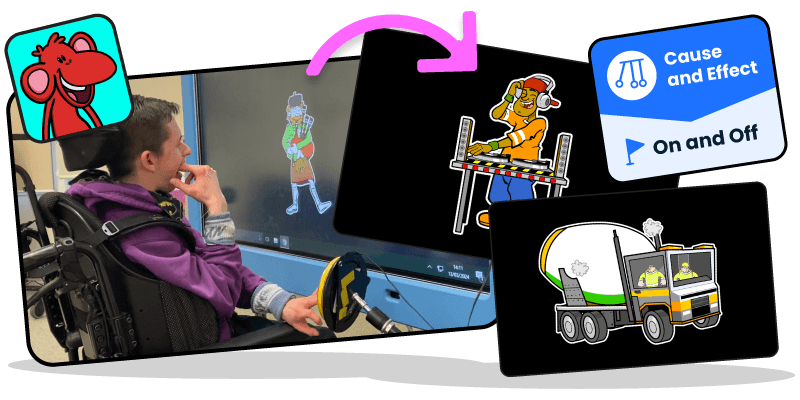
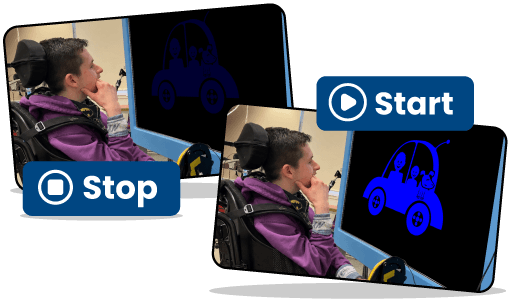
Games & Activities now includes a brand new On/Off milestone within the Cause & Effect learning objective. In each activity, the learner activates their access device once to bring a character or object to life. The animation continues until they activate it again to switch it off. When they restart the activity, a different character or object can appear. This creates a clear and repeatable pattern: start, watch, stop and start again. It gives learners time to notice the result of their action and discover that they can control what happens on screen.
Why On/Off is an important cause and effect skill.
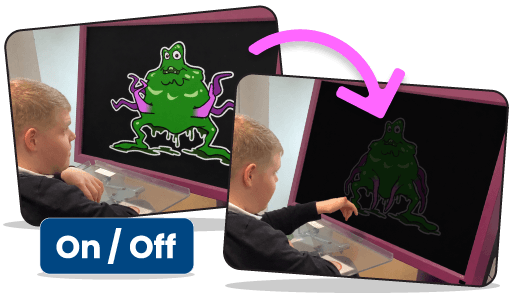
Early cause and effect activities often begin with a single action that creates an immediate response. On/Off adds another step. The learner is not only making something happen, they are also learning that a second action can change or stop it. This can support the development of purposeful activation, anticipation and early control. The immediate visual change between a dark silhouette and a lively animation makes the result easier to notice, while repetition gives learners opportunities to explore the connection at their own pace. The activities also create natural opportunities to model language such as ‘on’, ‘off’, ‘start’, ‘stop’, ‘again’ and ‘finished’.
Musical Musicians.
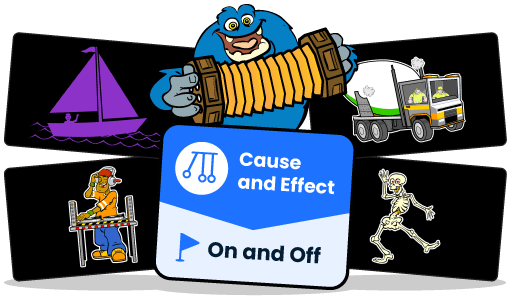
A musician waits as a dark silhouette. One activation lights them up and starts their performance. A second activation turns the scene off. When the learner starts again, a different musical character can appear, creating a fresh visual and sound experience.

Surprise Silhouettes.
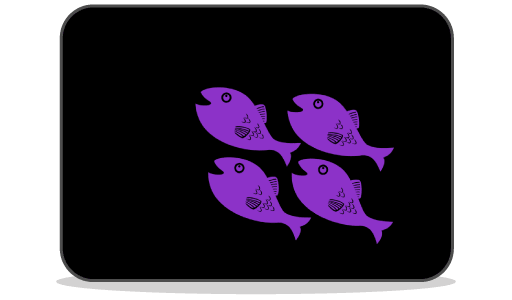
Learners can reveal a varied collection of animals, toys, gadgets, nature scenes and transport. The broad mix makes this a useful activity for building anticipation and encouraging learners to activate again to discover what will appear next.
Vrooming Vehicles.
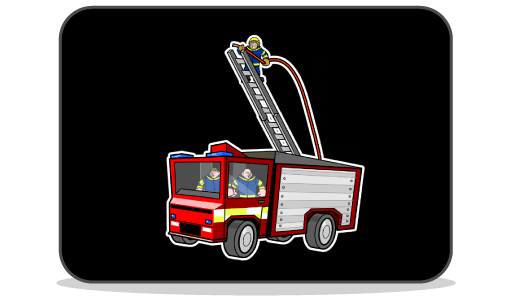
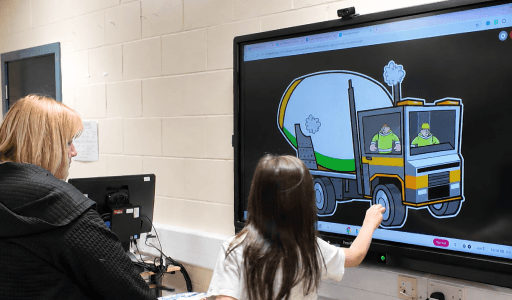
Busy vehicles including fire engines, bin lorries and cement lorries are ready to spring into action. Learners control when the vehicle starts and when it stops, with another vehicle waiting when they begin again.
Mighty Monsters.
Skeletons, slime, Frankenstein and colourful monsters bring a playful character-led option to the milestone. The bold visual change from silhouette to animation helps make the learner’s effect on the screen clear.
A familiar interaction, now in Games & Activities.
Customers who use the Switch activities in Sensory Space may recognise the On/Off interaction. Those sensory activities introduce the idea that one activation can start an animation and another can stop it. The new Games & Activities milestone brings that interaction into its structured learning pathway. Learners can practise the same core concept across a changing mix of musicians, silhouettes, vehicles and monsters, then continue developing their cause and effect and access skills through other milestones in the product.
Simple ideas for using the On/Off activities.
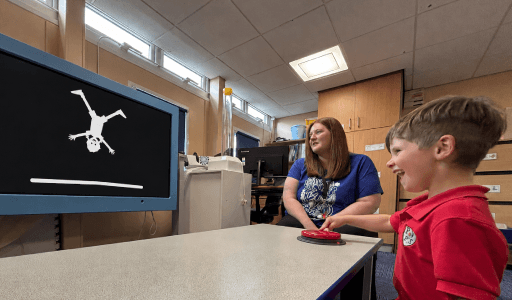
• Model the language: Say ‘on’ as the animation starts and ‘off’ as it stops. • Pause and wait: Give the learner time to notice what has changed before prompting another activation. • Build anticipation: Use phrases such as ‘ready?’ and ‘what will come next?’ before restarting. • Follow the learner’s preferences: Begin with the activity whose music, vehicles or characters are most likely to capture their attention. • Notice purposeful control: Look for signs that the learner is beginning to start or stop the animation intentionally.
Available now in Games & Activities.
Musical Musicians, Surprise Silhouettes, Vrooming Vehicles and Mighty Monsters are available now within Cause & Effect > On/Off in Games & Activities. If you already subscribe to Games & Activities, log in and choose a learner profile to get started. If you are new to HelpKidzLearn, try it free for 14 days to see how its accessible learning activities can support learners with a wide range of special educational needs.