By the end of the week, they'll all know when the snowballs are going to be thrown in the story. They'll all know when the water spray is going to be there.”
Caitlin McNiven
PMLD Teacher
At Green Fold School, Inclusive Stories is bringing reading to life, helping learners with complex needs communicate, make choices, build anticipation and enjoy stories in ways that are meaningful to them.
Green Fold School has been using Inclusive Stories for around four years. What began as a resource staff explored alongside other activities has gradually become embedded within literacy teaching across the school. For Caitlin McNiven and her team, one of the biggest strengths of Inclusive Stories is the way it can link directly to curriculum topics while remaining engaging and accessible for learners with complex special educational needs. The stories now form part of planned literacy sessions, supporting both group learning and independent reading opportunities. This flexibility means staff can use Inclusive Stories in different ways, depending on each learner’s needs, access methods and communication preferences. For Green Fold, HelpKidzLearn Inclusive Stories provides a practical and motivating way to make literacy more inclusive, helping learners take part in shared storytelling, build confidence and experience reading in a way that works for them.
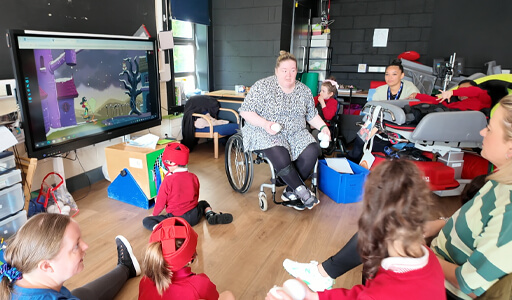
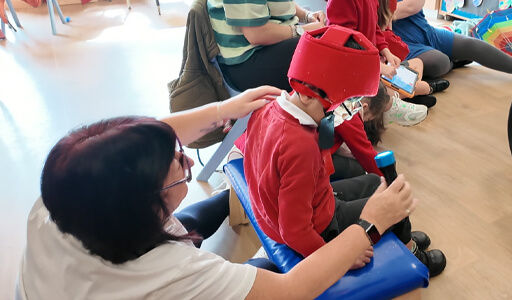
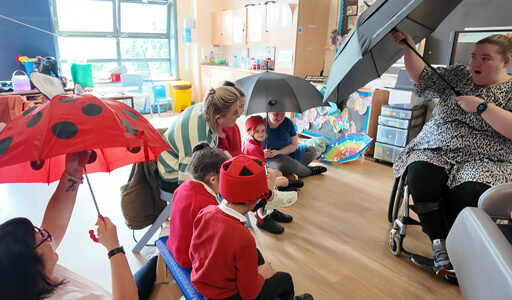
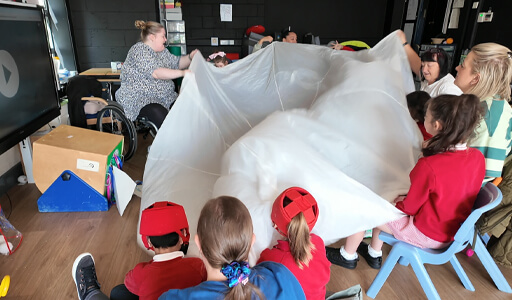
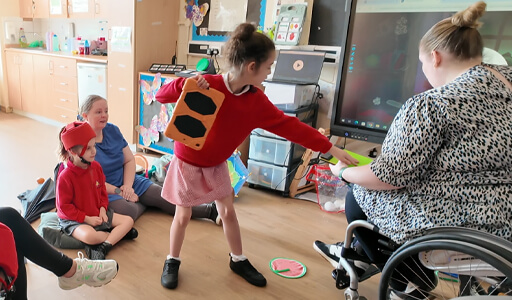
In one literacy session, learners explored Webster Witch's Wacky Weather, a story that linked directly to their geography topic. To bring the story to life, Caitlin used a range of sensory resources including water sprays, umbrellas, torches and snowballs. Learners were given opportunities to explore each resource as the story unfolded, helping them connect events in the story to real experiences. Multiple copies of the sensory resources meant learners could participate together, rather than waiting for items to be passed around the group. Staff carefully supported each child to engage with the story while giving them time to process, respond and explore each experience. For Green Fold, Inclusive Stories helps learners connect curriculum topics with meaningful sensory experiences, giving every child a clear and motivating way into literacy. “It's quite nice that we can pair it up to enhance whatever we're covering in the curriculum.”
One of the most powerful things staff observe is how learners become increasingly familiar with a story as the week progresses. During the first session, learners are experiencing the story for the first time. As they revisit it throughout the week, anticipation begins to develop. Caitlin explained that learners also begin to anticipate when the switch will be activated to continue the story. These moments help develop attention, understanding and engagement, while creating excitement about what might happen next. Throughout the session, Caitlin offered learners opportunities to take turns progressing the story. Rather than directing children to simply press the switch, she encouraged curiosity by asking questions such as, "Who would like a turn next?" and "Shall we see what happens next?" One learner reached out to request a turn, showing how Inclusive Stories can encourage active participation, choice and shared attention.
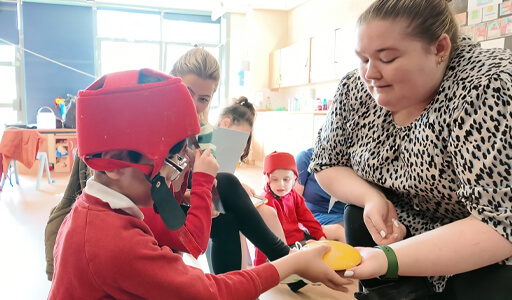
Inclusive Stories creates opportunities for much more than literacy learning alone. Throughout the session, staff worked alongside learners, supporting them to explore sensory resources, participate in turn taking and engage with the story in ways that suited their individual needs. "Everyone gets involved, especially in the Inclusive Story." The session created many opportunities for communication and interaction. Learners responded through vocalisations, gestures, anticipation and engagement with the sensory experiences around them. The weather-themed elements of the story proved particularly popular, with snowball throwing creating moments of shared enjoyment, laughter and interaction between learners and staff. As Caitlin explained, the stories naturally support a wide range of learning goals, including communication, waiting, turn taking, shared attention and engagement. For staff at Green Fold, Inclusive Stories supports teaching goals while keeping the joy of shared storytelling at the centre of the session.
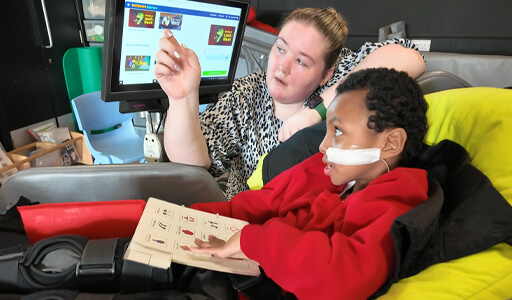
Inclusive Stories is also helping Green Fold develop reading for pleasure and independent reading opportunities for learners with complex physical needs. Following the group session, Caitlin presented a selection of stories and supported one learner to make his choice. Using his low-tech communication book, he selected My Day at Loch Ness before choosing "Go" to start the story. He then used a switch to progress through the story independently. For learners with physical disabilities, independently turning pages and accessing books can sometimes be challenging. Inclusive Stories provides an alternative way to experience books while maintaining learner control and independence. Caitlin explained that this has become an important part of their work around reading for pleasure. As the story progressed, the learner began waiting for the on-screen prompt before activating the switch again, showing his growing understanding of the activity.
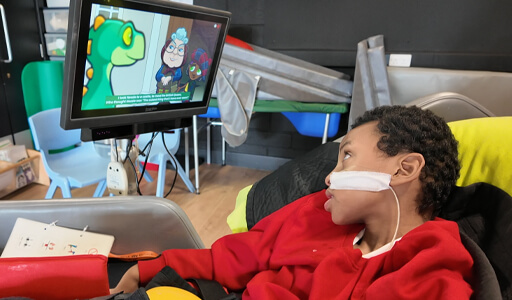
The simple sequence of choosing a story, starting it independently and sharing an opinion afterwards showed how Inclusive Stories can support communication, choice making and independence within a meaningful literacy activity. For Green Fold, this is a key part of what makes the resource so valuable. Learners are not only listening to stories, they are taking an active role in the experience. They can choose what they want to read, use switches to move through the story, respond in ways that suit them and share how they feel afterwards. These moments help learners understand that their choices matter and that they can influence what happens next. Inclusive Stories gives staff a flexible way to adapt reading opportunities around each learner, whether they are joining a group activity, using a switch, exploring sensory resources or communicating through a low-tech communication book.
Finding books that are both accessible and age appropriate can sometimes be challenging for learners with complex needs. Caitlin highlighted how Inclusive Stories helps address this by providing engaging stories that are suitable for learners of different ages, while remaining accessible to those working at earlier developmental levels. Rather than relying on books that may feel too young, learners are able to experience stories that are meaningful, motivating and appropriate for their age group. "It's quite nice that they're pitched appropriately for the children." This allows staff to maintain high expectations while ensuring that every learner can participate successfully. For Green Fold, having access to age-appropriate stories means learners can enjoy reading experiences that respect both their developmental needs and their stage of life.
Across Green Fold School, one theme appears again and again: engagement. For Green Fold School, Inclusive Stories offers much more than a collection of digital books. It creates opportunities for learners to communicate, make choices, develop independence and experience reading in ways that are meaningful to them.