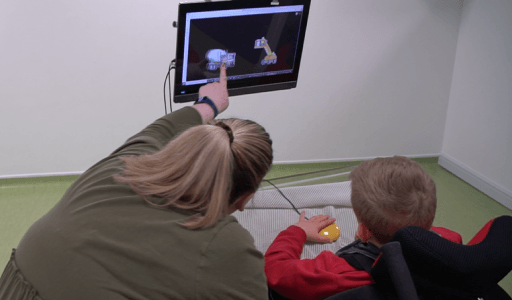
Targeting and Timing Activities for SEN learners.
Targeting and timing activities help learners develop more accurate interaction, stronger focus and better timed responses. They are ideal for learners who are ready for more challenge and have already begun responding to basic visual or audio prompts.
What are targeting and timing skills?
Targeting and timing skills help learners interact with the right object at the right moment. This may involve selecting a target in a fixed place, waiting for a moving object, or responding when something appears in a different position. These skills build on earlier 'attention and timing' work and help learners develop more accurate, purposeful interaction.
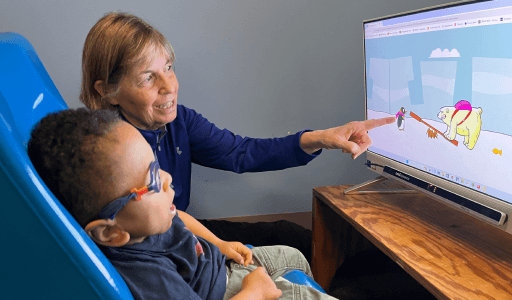
Why does targeting and timing matter?
Being able to aim for a target is an important step towards more independent access. It can support touch, mouse, switch scanning and eye gaze skills, helping learners become more accurate and intentional in the way they interact. Targeting and Timing can also support wider skills such as visual tracking, attention, hand-eye coordination, scanning, timing and early problem solving.
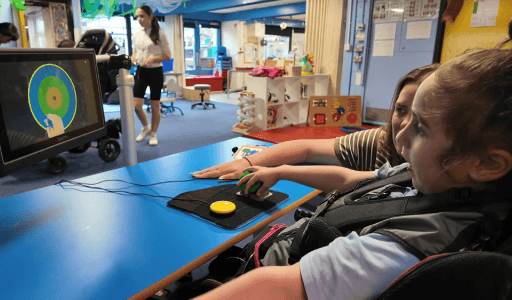
Start here if this sounds familiar.
Targeting and Timing can be a good fit when a learner is ready to aim towards a specific area on screen, activate with more intention, or practise improving accuracy. It can also help when a learner is beginning to look before they activate, track movement, or respond more purposefully to prompts and targets.
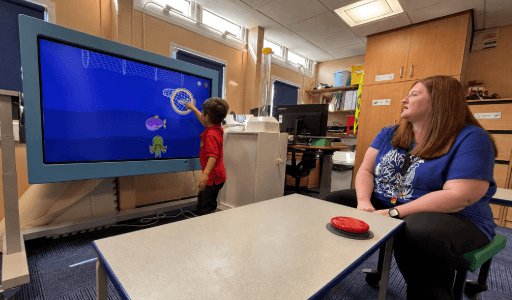
Targeting and timing milestones.
Games & Activities includes different types of targeting and timing activities, helping learners build accuracy and control step by step.
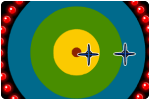
Static Targets
The learner waits for the right moment to target an object in a fixed position. This helps build accuracy in a more predictable way. Best when: the learner is ready to aim, but still needs a clear target.
Variable Targets
The learner targets an object that appears in different places. This adds more challenge and helps develop visual attention and flexibility. Best when: the learner can manage a clear target and is ready to search across the screen.
Variable Timing
The learner waits for the correct moment to activate when an object moves over a target. This builds both timing and accuracy together. Best when: the learner is improving with timing but needs more practice responding at the right moment.
Moving Targets
The learner targets an object while it is moving. This supports more advanced control, tracking and timed interaction. Best when: the learner is ready to track movement and aim with more precision.
A simple first session.
Choose the access method that is most comfortable and consistent for the learner today. Start with an activity where the target is clear and the challenge feels achievable. Keep the session short and repeat the same activity a few times, so the learner can focus on control rather than novelty. Look for small signs of intention, such as the learner looking towards the target before activating, waiting for the right moment, or improving accuracy over repeated attempts. These are all meaningful steps towards more purposeful access. If accuracy drops, reduce the demand rather than pushing through. Go back to a clearer target, slow the pace, or repeat a familiar activity. Confidence usually builds faster when the learner can experience success often.
What success can look like.
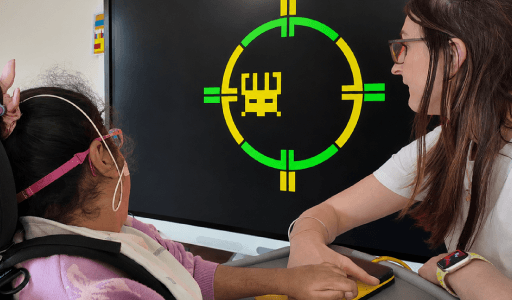
Progress might look like a learner looking towards the target before activating, waiting for the right moment, improving accuracy across repeated attempts, or showing more purposeful movement towards a target. You may also notice fewer random activations and more consistent responses when the target appears. Small improvements in accuracy can be easy to miss, but they are important signs that the learner is building control.
Where can learners go next?
When targeting is becoming more reliable, the next step is often to introduce early choice-making. If the learner is ready to choose between two clear options, try Introduce Choice, where they can begin making simple, meaningful selections with predictable outcomes.