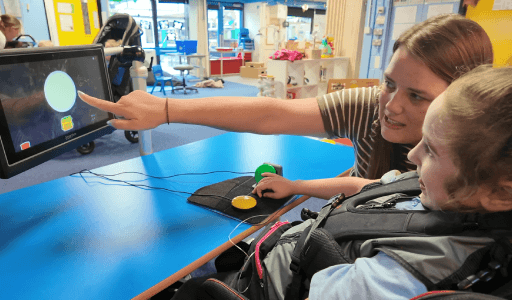
Attention and Timing Games for Special Education.
Attention and timing activities help learners develop focus, anticipation and the ability to activate at the right moment. These skills are important for learners who already understand basic cause and effect and are ready for a more controlled level of interaction.
What are attention and timing skills?
Attention and Timing activities help learners practise noticing a cue, waiting, and activating at the right moment. This milestone is useful when learners understand that their action can make something happen, but need support with pacing, impulse control or responding to changes on screen. In Games & Activities, Attention and Timing gives learners opportunities to watch, wait and act with more purpose, while still keeping activities motivating, accessible and easy to repeat.
Why are these skills important?
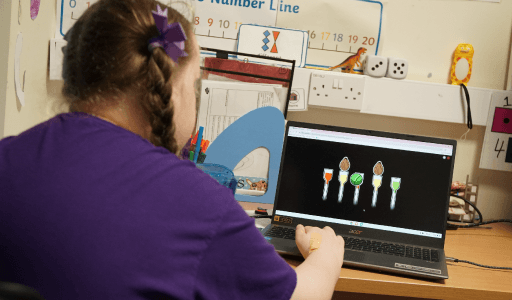
Timing is an important part of independent access. A learner may be able to press, touch or dwell, but still need support to understand when to activate. By building attention and timing gradually, learners can begin to respond more purposefully, wait for cues, track what is happening and take part with greater confidence. This can also support wider skills such as anticipation, listening, visual attention and early turn-taking.
Start here if this sounds familiar.
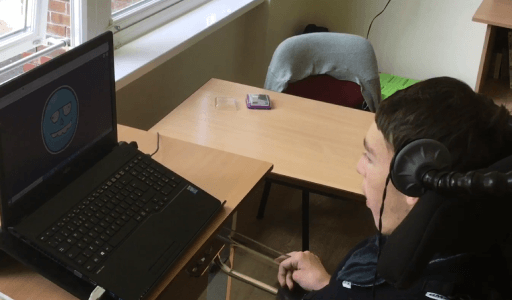
Attention and Timing can be a good fit when a learner is pressing too quickly, activating before a cue appears, or needs help slowing down and noticing what is happening on screen. It can also help learners who are ready to move beyond simple cause and effect, but still need a clear, predictable structure.
Attention and timing milestones.
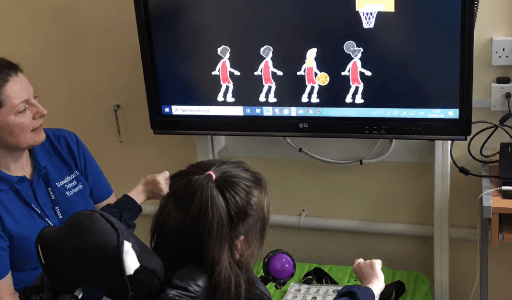
Games & Activities includes different types of attention and timing activities, helping learners build focus and control step by step. You do not need to try every activity type at once. Choose the route that best matches what the learner is ready to practise.

Wait then Press
The learner waits for something to appear before activating. This helps build anticipation and more controlled timing. Best when: the learner presses too quickly and needs a clear moment to wait for.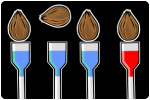
Wait for Change
The learner waits for something to change before responding. This encourages closer observation and more purposeful activation. Best when: the learner is beginning to watch the screen and respond to changes.
Locate Change
The learner notices that something has appeared in a different place and responds to it. This supports both attention and early targeting. Best when: the learner is ready to look more actively before responding.
Experimental Play
The learner can activate at different times to create different outcomes. This encourages exploration while still building awareness of timing. Best when: the learner is ready for more variety but still benefits from a clear response.
Ready Steady Go
The learner anticipates the right moment to activate. This helps build timing, focus and more confident participation. Best when: the learner responds well to predictable language and repeated cues.
A simple first session.
Choose an access method that is comfortable and consistent for the learner today. Start with one activity type and keep the language simple. Use short cues such as “wait”, “watch” and “now”, then pause long enough for the learner to process what is happening. The aim is not to get perfect timing straight away. The aim is to help the learner notice the cue and begin to connect it with their action. Short sessions work well here. A few successful moments of waiting and activating at the right time can be more helpful than a longer session with lots of prompting. If a learner presses too quickly, avoid treating it as a mistake. It is useful information. It may mean the activity needs a slower pace, a clearer visual cue, or a shorter session where success is easier to spot.
What success can look like.
Progress might look like a learner pausing briefly before activating, watching the screen more closely, waiting for a cue with less prompting, or beginning to anticipate the right moment. You might also notice fewer rapid presses, longer attention, or clearer looking before activation. These changes can be small, but they are important signs that timing and attention are developing.
Where can learners go next?
Once learners are becoming more confident with waiting, noticing and activating at the right moment, they may be ready for Targeting and Timing activities, where the focus shifts towards accuracy as well as timing.