How Holly Grove School Uses Sensory Space Across the Curriculum

Over the past year, Holly Grove School has used Sensory Space in different ways across the curriculum, helping pupils engage, communicate and make progress towards key targets.

Part of every day learning.

When Holly Grove first trialled Sensory Space, staff quickly saw how well it engaged their pupils. One year later, that early enthusiasm has grown into something much more embedded, with Sensory Space now supporting learning across different classes, ages and curriculum pathways. This time, we spoke to Samantha Hindle and Jenny Darcy, Class Teachers, about how Sensory Space has developed over the past 12 months. What stood out straight away was how naturally it now fits into classroom practice. Rather than being used in just one way, it has become a flexible resource that staff can adapt for different learners and different goals across the school day. That flexibility has been especially valuable at Holly Grove, where pupils’ needs can vary widely and where staff are always looking for meaningful ways to support engagement, communication and progress.

1.Part Of Every Day Learning
Jenny Photo
We’ve got children on the semi-formal curriculum and the sensory curriculum, which Sensory Space links to really nicely. We’ve seen really good progress, with pupils achieving targets through using this resource.
Jenny Photo
Jenny Darcy
Class Teacher
Supporting progress across the curriculum.

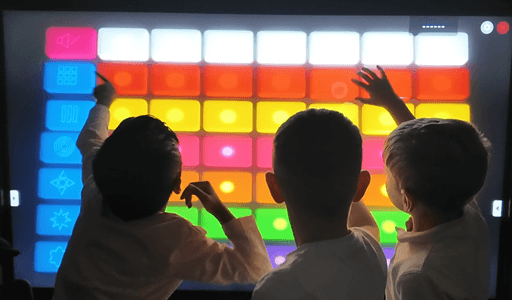
One of the strongest themes from our visit was how well Sensory Space links to the wider curriculum. Staff spoke about using it to support pupils working on the semi-formal and sensory curriculum, as well as younger learners following EYFS-based targets. Over the past year, Sensory Space has supported work around cause and effect, attention, turn taking, communication and shared focus. It has also linked well to areas such as computing, communication, PSED, functional English and functional maths, giving staff a practical way to work towards a range of learning goals through one accessible resource.

2.Supporting Progress

Tailoring activities for different learners.

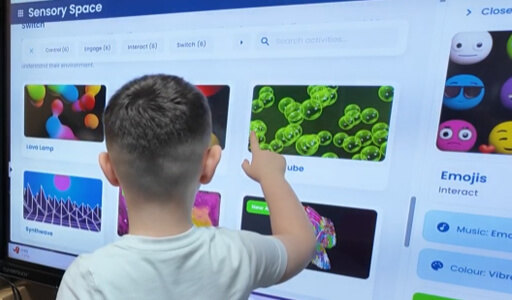
A real strength of Sensory Space at Holly Grove has been the way staff can adapt it to suit the learner in front of them. With different access options and a range of activity types, it gives teachers the freedom to choose the right level of challenge for each pupil. That ability to adjust the activity based on the child’s needs on that day has made Sensory Space especially useful in practice. As Samantha put it, “It’s nice to have those different levels of skills and different skills that they’re using, and then you can really pinpoint what you want that learner to do on that day.” This means staff can use Sensory Space with real purpose, whether they are focusing on simple interaction, sustained attention, waiting, regulation or turn taking.

Choosing
Samantha Photo
If I know that one of my pupils might not have the longest attention, I will just go for the Interact category. If I know that they’ve got a bit more focus to them, I’d get them to do the Star one because they have to ‘press and hold’ on and they have to keep that attention and sustain that attention.
Samantha Photo
Samantha Hindle
Class Teacher

Meaningful moments that stay with you.

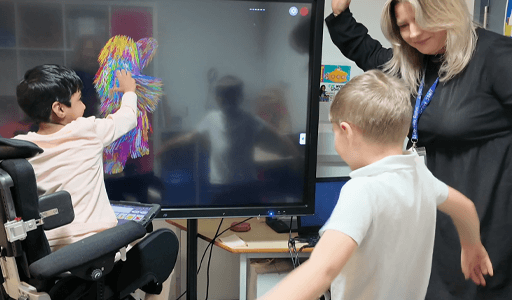
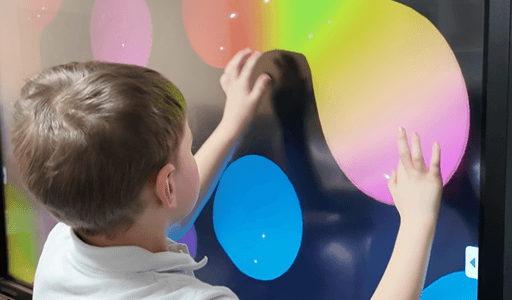
Some of the most memorable examples from Holly Grove came through the moments staff shared from the classroom. These were the stories that showed just how much impact Sensory Space can have when it is used in a way that feels right for the learner. One especially lovely example involved a pupil who would not usually choose to join a group activity or engage at the interactive whiteboard, because it could feel too demanding. During a session using the space activity, he quietly came over by himself and began watching from the side. From there, with a little support, he started taking turns alongside another child. For staff, this was a real wow moment. Not only had he chosen to join in independently, but it also led to a genuine social interaction with a peer. It was a small moment on the surface, but one that meant a great deal because it showed engagement, shared attention and connection happening naturally.

4.Meaningful Moments

Supporting communication and sensory responses.

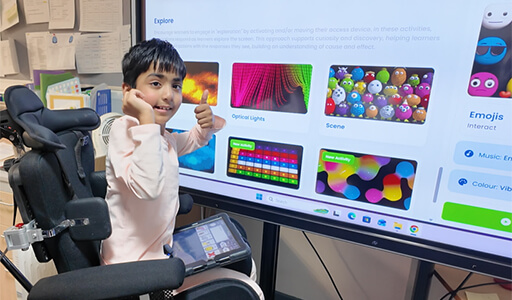
Over the past year, Holly Grove has also seen how Sensory Space can support communication in ways that feel natural and easy to build on. The shared focus of the screen creates opportunities for pupils and staff to respond together, make choices and communicate preferences. Jenny spoke warmly about one pupil in particular, explaining: “Particularly with my sensory learner, a lot of the things that we look for with his targets is about his eye contact and nodding his head and things like that. He particularly loves the music element and his interaction with it is in nodding his head and dancing along to it.” These kinds of responses matter because they give staff meaningful ways to observe engagement and build on individual targets. For some pupils, progress may look like choosing an activity, asking for help or sustaining attention for longer. For others, it may be a smile, a movement, eye contact or a shared moment of enjoyment that tells staff they are connecting with what is happening.

Communication

Why Sensory Space continues to work at Holly Grove.

One year on, Sensory Space is giving Holly Grove a flexible and engaging way to support pupils across the school. It helps staff tailor activities around each learner, support progress towards individual targets and create sessions that feel calm, purposeful and enjoyable. What makes Holly Grove’s experience so powerful is that the impact can be seen in lots of different ways. For some pupils, it is helping them build attention and focus. For others, it is supporting communication, turn taking, sensory responses and early interaction. And sometimes, it is those especially memorable moments, when a child joins in on their own, shares an activity with a peer or responds in a way that staff know is significant. Holly Grove’s experience shows how the right sensory resource can become a genuinely valuable part of teaching and learning, helping pupils make progress in ways that feel personal, motivating and meaningful.

5.Supporting Communication

Start your Sensory Space journey

Related case studies.

  • Holly Grove Logo

    Sensory Space

    "All of the children who have tried Sensory Space so far have been totally mesmerised by the animations, colours, and the sound effects of all the different activities. It was wonderful to see them so engaged and inspired".
    Holly Grove Icon
    Holly Grove
    Burnley, Lanchashire.
  • Pendle View School Logo (1)

    Sensory Space

    “The range of activities is fantastic, and the descriptions explaining what skills are developed are so helpful – whether you’re planning sessions or assessing progress. From switch access to touch and eye gaze, the software adapts to our pupils’ individual needs.”
    Pendleview
    Pendle View Primary School
    Colne, England.
  • Green Fold Logo 150Px

    Sensory Space

    "Sensory Space is totally accessible. For those children just starting out, it hits really well. It’s very engaging and colourful – you’d really see those visual skills developing, and slowly improving skills in a way that’s appropriate for each child."
    Green Fold 400Px
    Green Fold School
    Bolton, Lanchashire.